

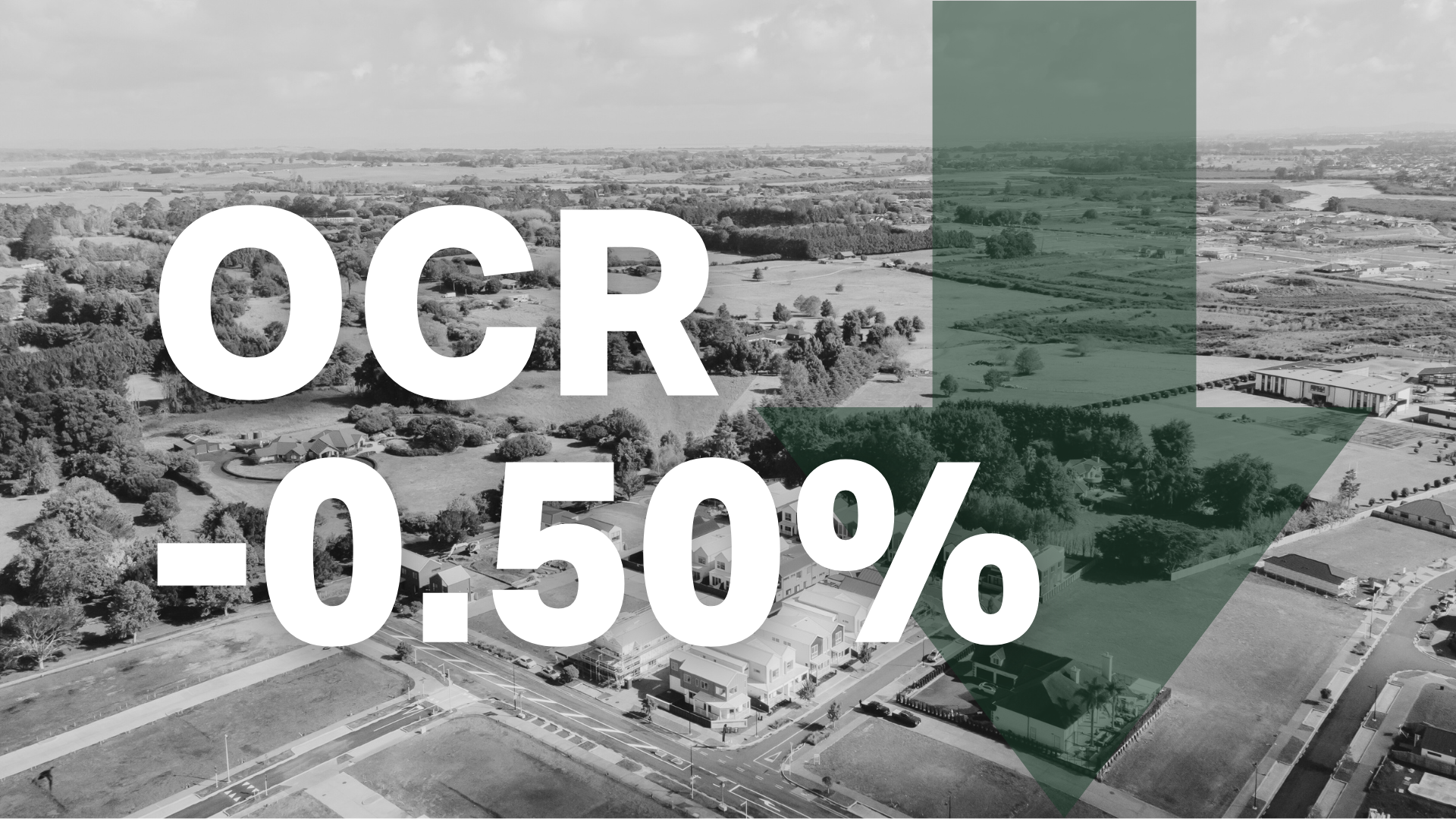
The Reserve Bank’s latest move marks a clear shift in the direction of New Zealand’s economy – and the property market along with it.
On 9 October 2025, the Official Cash Rate (OCR) was cut by 50 basis points, taking it down to 2.5 percent – the lowest level since August 2022. It’s a bold move that signals one thing above all: the tide is turning.
After two years of tight monetary conditions designed to cool inflation, we’re now seeing the first real signs of a new cycle emerging. Borrowing costs are easing, market confidence is rebuilding, and property is once again drawing the attention of buyers who had been waiting on the sidelines.
Why the Reserve Bank Moved – and What Comes Next
The Reserve Bank’s Monetary Policy Committee (MPC) didn’t hold back this time. It considered a smaller 25-basis-point cut but ultimately opted for a stronger “front-loaded” approach to stimulate consumption and investment.
As the MPC explained, a larger reduction was seen as the least-regrets option – a clear signal that it’s ready to support the economy’s recovery. Inflation, currently sitting at 2.7 percent, remains within the top end of the target band, but with “spare capacity in the economy,” the RBNZ expects it to settle closer to the 2 percent midpoint by mid-2026.
Perhaps the most important part of the announcement was what came next:
“The Committee remains open to further reductions in the OCR as required for inflation to settle sustainably near the 2 percent target.”
That means more cuts could follow before the end of the year, with financial markets already pricing in a further 25-basis-point drop at the next decision in late November.
From Policy to People – How the Rate Cut Flows Through
The OCR sets the tone for all lending in New Zealand, influencing the rates banks offer on mortgages, business loans, and savings. And banks have wasted no time in responding.
Westpac dropped its two-year special fixed home loan rate from 4.65 to 4.49 percent, while variable home loan rates will fall another 0.3 percent next week. ANZ has cut its floating home loan by 40 basis points to 5.89 percent, with flexible business loans also following suit. ASB lowered its housing variable rate to 5.99 percent and trimmed its orbit and build-linked loans accordingly.
For households, that translates to hundreds of dollars in potential monthly savings for those rolling onto new rates or refinancing. Finance Minister Nicola Willis said the move “will be welcome news to mortgage-holders and businesses, as OCR drops flow through to interest rates.”
But the impact extends beyond just lower repayments. As rates fall, consumer confidence tends to lift. People spend more, businesses invest again, and the cycle of growth begins to rebuild.
What This Means for Buyers and Investors
For property buyers, especially those entering the market for the first time, this is the most favourable interest-rate environment in over three years. The combination of easing rates, stabilising inflation, and softening house-price growth is creating a sweet spot of opportunity.
According to Cotality chief economist Kelvin Davidson, “The bigger, front-loaded 50 basis-point cut was probably seen as the least-regrets option.” While the immediate impact on fixed mortgage rates may be limited – given that banks had already begun trimming rates in anticipation – the psychological shift is significant.
“Today’s decision is the ‘shock treatment’ required to get everyone back into gear,” Davidson noted. “The recent green shoots we’ve been seeing should emerge fully in 2026, and as unemployment starts to drop again, house prices are likely to rise next year.”
In short: the window of lower interest rates may not last long.
Investors, too, are already repositioning. Many who had moved capital into term deposits during the high-rate environment of 2023–24 are now looking back toward property. As term-deposit yields shrink, the appeal of tangible assets – particularly land, new builds, and quality homes in growth corridors – becomes stronger once again.
At Burberry Heights, we’ve started seeing this shift firsthand. Enquiries from both first-time buyers and returning investors have increased since mid-September, reflecting a growing sense that the market has found its floor.
A Reset for the New Zealand Market
The property market doesn’t turn overnight – but monetary policy shifts like this set the stage for what’s to come. Historically, a 50-basis-point cut has signalled the start of an upward cycle within six to 12 months, as confidence builds and borrowing activity rises.
While some economists urge caution – noting that debt-to-income (DTI) restrictions and lending standards still apply – the broad consensus is that the worst of the downturn is behind us.
As the RBNZ itself acknowledged, “household consumption is recovering, partly because of lower interest rates.”
For developers and homeowners alike, that’s an encouraging sign. Demand for well-located, lifestyle-driven communities – such as Karaka’s Burberry Heights – is expected to strengthen as more families look to secure long-term homes before prices begin to climb again.
Looking Ahead
The next OCR review is scheduled for 26 November 2025, and all signs point toward another cut – potentially taking the rate to 2.25 percent or lower. That would mark a full 3-percentage-point fall from the 5.5 percent peak just over a year ago.
If that happens, the effects could be far-reaching:
- More accessible lending for buyers with smaller deposits
- Renewed demand for land and new-build projects
- Gradual upward pressure on property values through 2026
- Stronger resale markets for homeowners upgrading or downsizing
Of course, global factors – from China’s economic slowdown to U.S. trade policy uncertainty – will continue to influence how fast and how far New Zealand’s recovery goes. But domestically, the signals are clear: the Reserve Bank is now prioritising growth over restraint.
As Davidson summarised, “It’s taking a lot of work to get this economy turning around – but the direction is finally right.”
The Bottom Line
After a long stretch of headwinds, the latest OCR cut represents a genuine turning point for the New Zealand property market. Lower borrowing costs, easing inflation, and renewed investor sentiment are combining to restore confidence across the sector.
For anyone considering a move – whether to secure a family section, build a new home, or reinvest in property – the next few months could represent the beginning of a new cycle.
At Burberry Heights, we’re already seeing that renewed energy translate into buyer activity. With limited sections available and financing conditions improving, now is the time to explore your options – before the market fully shifts gear.
For more information on Burberry Heights or to arrange a private viewing, contact Nicolas Ching on 021 184 7777 or nicolas@goodformliving.co.nz.